We’ve been working with the physiotherapists at the School of Allied Health professionals at Keele University for several years now. (Here's more about the work we’ve done together - link to either previous case study or new piece from Claire).
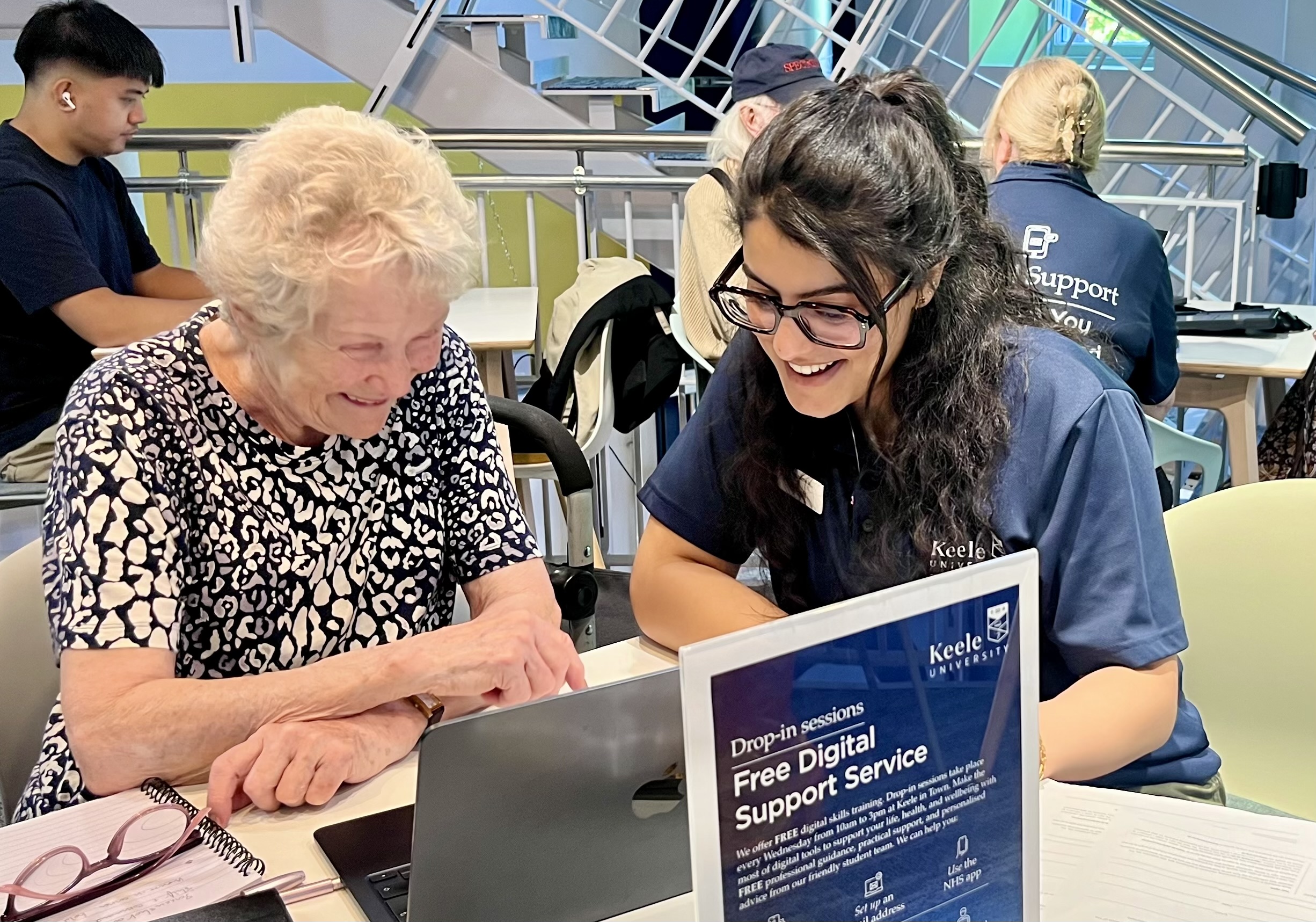
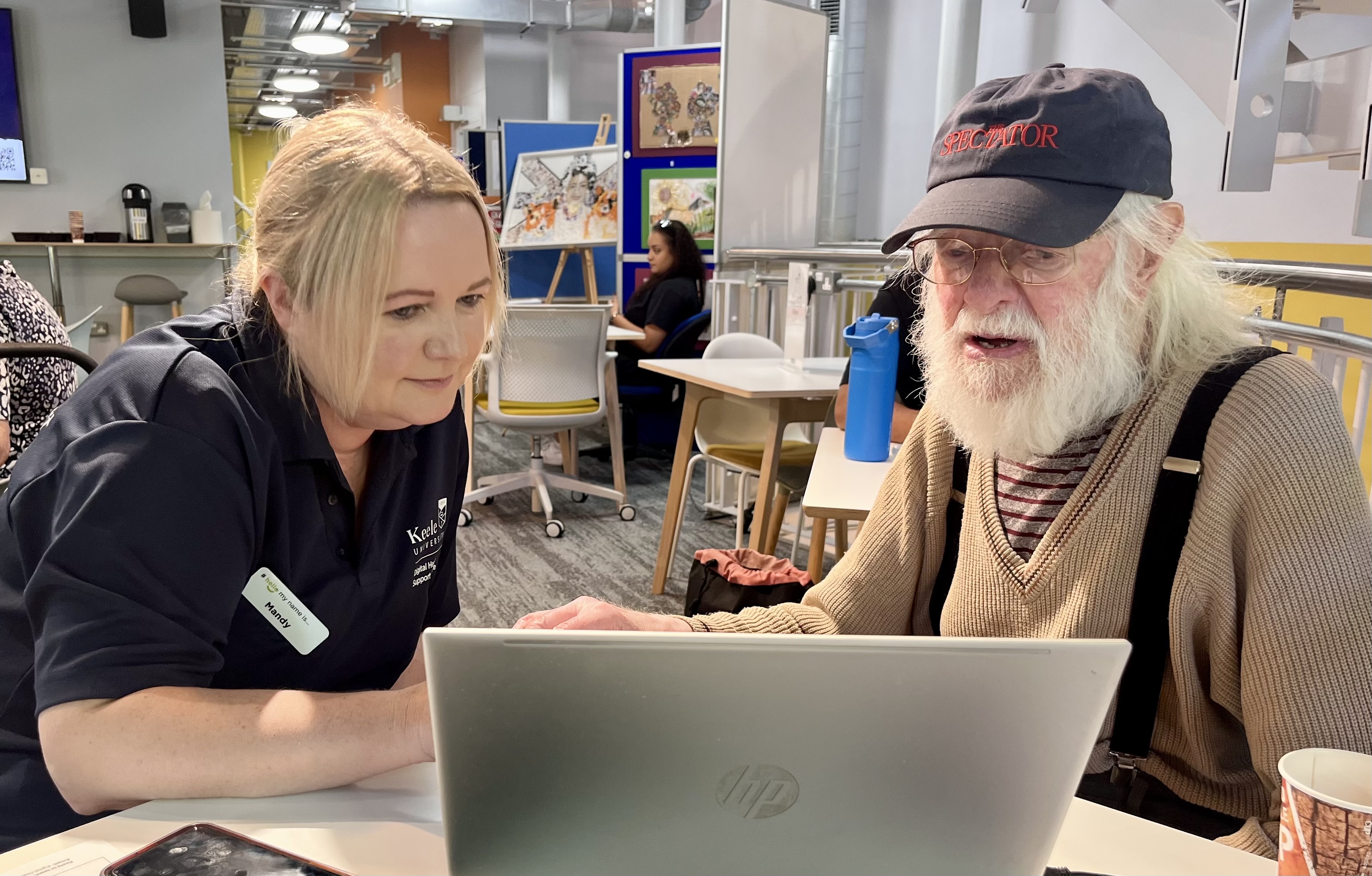
One of the many activities the School organises around digital inclusion is a regular drop-in digital support session in the centre of Newcastle-under-Lyme. Student physios and occupational therapists come along on a 5-6 week placement and once a week help people with digital skills and confidence.
Why spend time on digital inclusion?
The NHS has a commitment to help people use more services online. But students are often "digital natives" and the realities of digital exclusion can be hard for them to fully appreciate. However, lots of patients, especially older ones, need help with skills if they're going to benefit fully from digital health services. The digital drop-in scheme helps clients get the support then need and helps students grow in their roles. Here's five ways it's good for everyone...
1. Understanding the issues
The students start with a basic script with prompts to help explore each clients' needs, including questions around access to mobile data and connectivity, general confidence and digital issues affecting their ability to access services.
But in most cases, it's through informal conversations and discussion with the client that their needs become clear. And though there are often specific skills and barriers that the students need to take into account, it's very rarely straight-foward....
I learned many peope are not unwilling to learn – they often just haven’t had the right support. I realised confidence is a bigger barrier than the technology itself.
Joumana
Student and Digital Champion
2. Tailored teaching
The initial plan was to help clients directly with health-related content, like using the NHS app. But lots of people aren’t actually at that stage yet – so the students provide support tailored to whatever the individual wants to learn. It’s often about getting set-up and confident with smart phones. But the support is deliberately flexible: they've helped with anything from sending online birthday cards to connecting to WiFi hotspots and organising email storage.
We connected learning to something Marion genuinely wanted to do… Digital health support works best when it’s meaningful, graded and adapted to the person. It should support what a person needs and wants to do in everyday life.
Mandy
Student and Digital Champion
3. Adapted delivery
The students were encouraged to take a person centred approach and adapt how they worked together to their client's needs. Some clients wanted written notes that they could refer back to and practice in their own time; others wanted regular repetition of a task over a period of weeks until they felt completely confident. Students brought techniques from their own disciplines/ practices - for example, some occupational therapists used visual techniques to help clients identify and understand their digital journey.
It wasn't just the "what" that was tailored, it was the "how" too.
Thank you for being patient with me. I told you the first week I was having memory problems and you have never bought it up again, but I know you have remembered because you have been patient with me, making it simple.
Mick
Learner
4. Making a difference
Students reported seeing their learners get more confident with the devices or tasks they were trying to complete – bringing immediate practical benefits like better connections with friends and family. But they also saw a growth in wider confidence, independence and pride in their learning and in many cases, built relationships over weeks of support. It was hugely beneficial for students and learners alike.
This is like winning the world cup for me
Mick
Learner, on finding old photos he thought were lost
5. Professional Development
The students acquired a huge range of skills and knowledge during their placements - from techniques like active listening to a deep understanding of digital exclusion, how it affects people and what they can do to help.
As Joumana, one of the student Digital Champions put it..
“This experience has been really valuable for my future career as a physio therapist.It reminded me that not everyone will feel confident using these systems, and taking time to understand individual barriers can make a big difference."