Inclusivity for all
Driving equality across health, young people appreciating the value of tech and overcoming barriers for access. Led by Joe Pollard & Iona Chamberlain-Clark
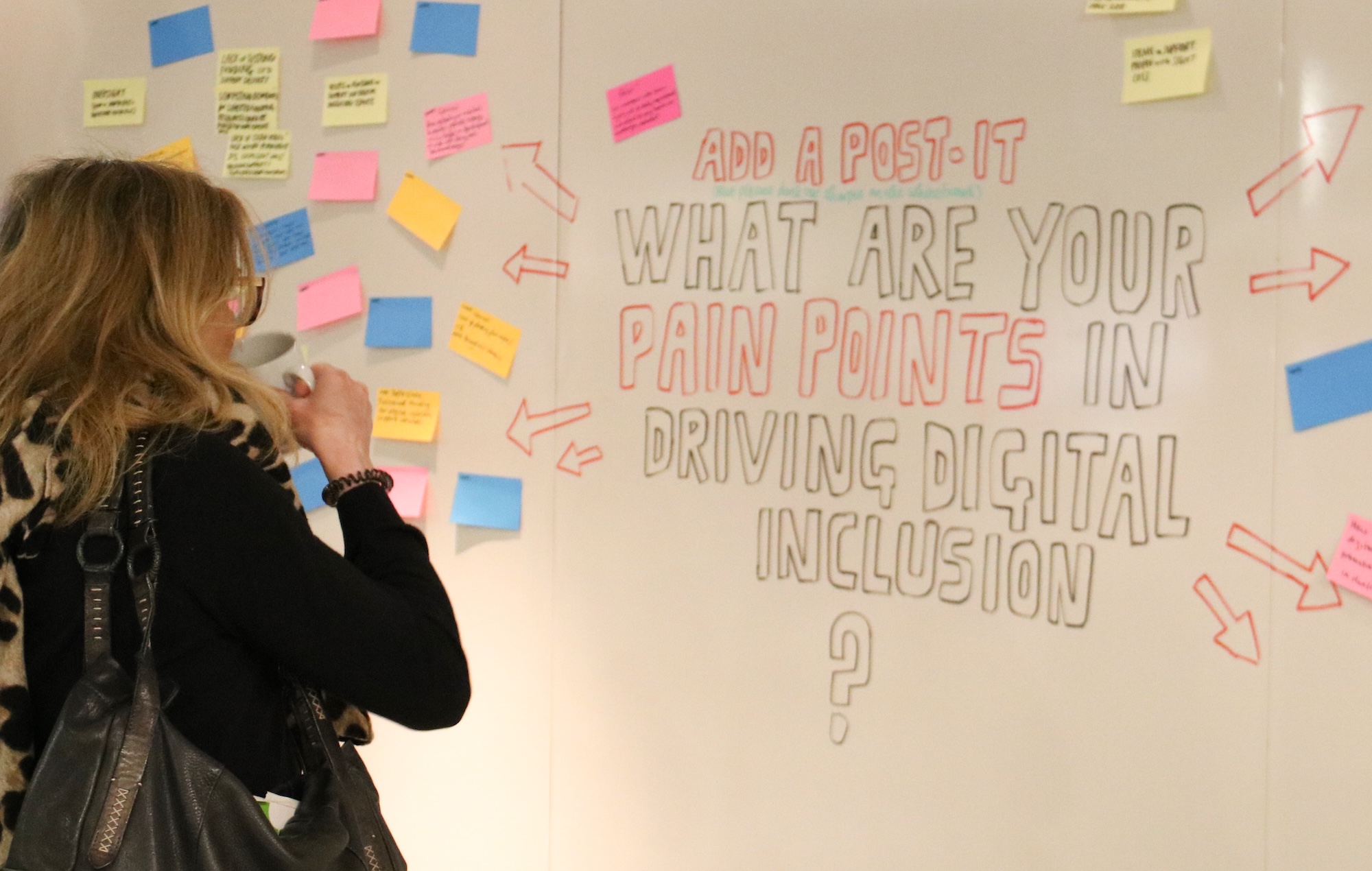
Challenge: We recognised that inclusivity is not fixed and that what “good” looks like varies between people and communities. A lack of shared understanding can create uncertainty and avoidance, particularly where systems, language, or digital technologies feel complex or intimidating. Language itself can act as a barrier, reinforcing fear or exclusion rather than confidence.
Digital approaches alone cannot address inequality. Many voices remain offline due to access, trust, capacity, or preference. And offline engagement methods, while essential, are often under‑resourced.
There were also concerns about dark design and the risk that poorly designed digital services can increase disadvantage.
A further challenge is ensuring community insight meaningfully informs policy and service design, rather than being collected without clear routes to impact.
Good Practice Examples: Good inclusive practice is based on a shared, simple, and non‑threatening understanding of digital and data initiatives that feels relevant and empowering. It requires sustained investment in user research and engagement, ensuring communities actively shape design through co‑creation.
Strong offline services must be maintained alongside digital ones to avoid excluding those unable or unwilling to engage digitally. The discussion highlighted the potential of AI‑enabled content to improve accessibility when used responsibly and grounded in local context.
Participants emphasised understanding where digital adds value and where it does not, valuing lived experience, prioritising listening over speed, and using open, transparent data and trusted digital hubs, while making effective use of existing technologies.
Actions: Agreed actions include reviewing current practices for unintended barriers, sharing good practice more widely, and improving signposting to support and guidance. Ongoing dialogue, follow‑up, and accountability were seen as essential to turning insight into meaningful change.
Older Generations
Enabling digital inclusion for older users in an ever changing and advancing technological world. Led by: Prerana Sabnis
Challenge: We discussed the challenges older generations can face in today’s increasingly digital world. However, we recognised that difficulty with technology is not determined by age alone. Many older users are highly digitally capable, yet can be overlooked due to common stereotypes.
Challenging these assumptions and actively including digitally confident individuals from all age groups is an important and often under‑recognised part of improving digital inclusion.
Good Practice Examples: We discussed a multi‑layered approach to supporting older generations in an increasingly digital world. This includes four key elements.
- First, we must understand users’ needs so digital products address the right problems.
- Second, this insight should be used to design simple, inclusive services that work for people of all ages, particularly those who may struggle with rapid technological change.
- Third, community engagement is essential. This includes supporting people with lower digital confidence and involving digitally capable individuals from older generations to build trust and peer‑to‑peer support.
- Finally, ongoing monitoring is needed to keep pace with changing user needs. This approach is iterative rather than linear, with COVID‑19 highlighting how quickly expectations and behaviours can evolve.
We also emphasised the importance of strong partnerships, bringing together expertise from charities, government advisory boards, and other stakeholders at the right levels to deliver sustainable digital inclusion.
Actions: We agreed that getting to “good” means building on existing and ongoing research, sharing what we learn widely, and making insights visible to the right people. Just as importantly, it’s about taking small, practical steps and being realistic about what’s achievab
Device Availability & Accessibility
Inequality of device availability, both availability of devices themselves and ability to use them. Led by Jonathan Cobb.
Challenge: We discussed the challenges of accessing devices, the software and licenses required to use the devices and ensuring secure connections and skills to stay safe while using these devices.
Good Practice Examples: We discussed the support available to use donated devices – e.g. pastoral and setting up government apps.
Actions: A comms strategy to help spread the word around device donations; support to access trusted connections; AI tools for accessibility; language translation tools; and funding licenses.
Upskilling others within organisations & training
Enabling organisations to develop the skills within and understanding what external training is available to compliment this.Led by: Emma Weston & Sally Caughey
Challenge: We discussed challenges of motivation among learners and the need to build confidence among volunteers to tackle digital inclusion.
For volunteers the challenges lie in knowing how to best engage with learners and to help them. We also discussed the need to recognise and adapt to different learning styles.
Learners face a different set of challenges starting with understanding the value to them and why they should prioritise digital skills when they are already over loaded.
Good Practice Examples: We discussed examples of what good could look like including:
- Training content – ake training materials accessible and easy to consume and provide opportunities to apply the learning and see the benefits as part of the delivery.
- Delivery models – encouraging peer to peer training to reinforce learning and scale delivery; encourage in person training to build a sense of community; invest in effective train the trainer models.
- Volunteer value – articulating the value to volunteers such as personal learning and career development .
- Engaging leadership to support digital inclusion as a priority and to drive a learning culture.
Actions: Build a communications strategy to articulate the benefits of digital inclusion.
Connect with experts for training content – don’t reinvent it.
Establish an effective train the trainer program with a clear link to how it supports career journeys (e.g. CPD).
Consider a ‘cascade’ approach to be self sustaining.
Secure leadership buy in.
Working together as community (with a NE regional focus)
How this group today can connect to create bigger impact, including how digital inclusion needs to be targeted across the Northeast region.Led by: Emma Homes & Kate Holmes
Challenge: Organisations and sectors working in silos although there was a recognition that things are better in this regard than they were in the past.
Different cultures including exclusive language/jargon/acronyms – challenges for effective partnership working.
Duplication of efforts when time, people and money could be better used elsewhere.
Good Practice Examples: A portal, triage tool, directory, helping or something where all the information on digital inclusion support is held would be great. The Department of Work and Pensions mentioned their district provision tool. Kate mentioned the triage tools that exist in some local authorities such as the East Riding of Yorkshire.
Meetings if held should be meaningful and lead to positive action on the issue of digital inclusion.
Partnership working – Voluntary, Community, Faith and Social Enterprise sector, NHS and healthcare providers, local authorities, Department for Work and Pensions, Home Office and other relevant Government Departments and private sector.
Actions: Clarity on the roles and responsibilities of the different networks in the region.
Get people with lived experience of digital inclusion in the room/at events.
Longer-term and sustainable funding which can be relied on and allow proper planning. Not paid in arrears as too challenging for some organisations particularly in the voluntary, community, faith and social enterprise sector.
Events like today but more niche as well around specific communities of interest or themes.
Celebrate progress and share stories.
Alternative provision for those who are struggling digitally or would prefer another way. Make sure the alternative provision is promoted!
Holistic approaches to supporting individuals with their specific and perhaps multiple needs.
Ensure support for those who are neurodiverse for example and those who have experienced domestic abuse or online fraud.
Tailored approaches for local needs.
Bottom-up approach has value.
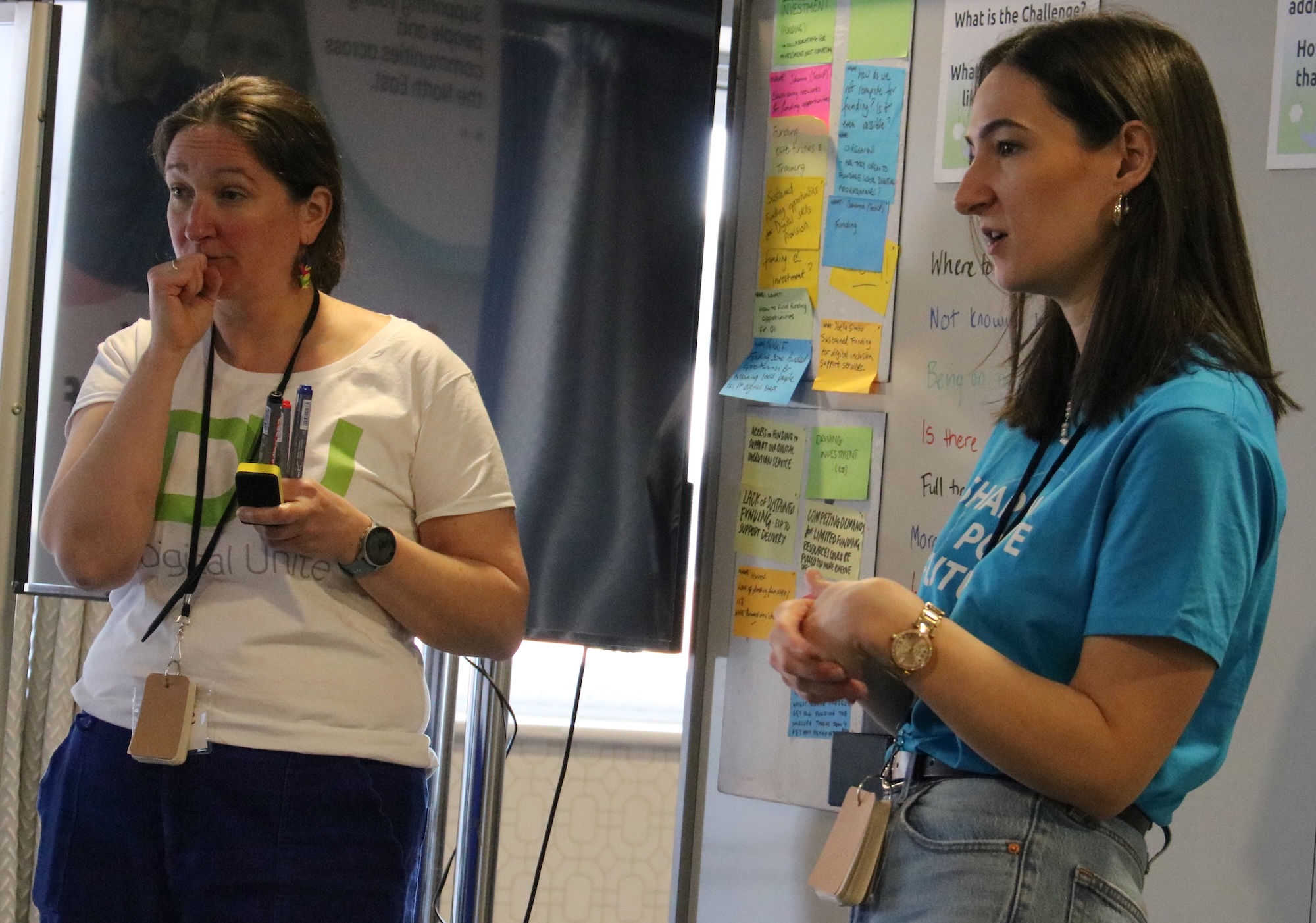
Driving Investment
How communities can drive the investment needed for wider Digital Inclusion. Collaboration, not competition is critical for success. Led by: Joy Shepheard-Walwyn & Sarah Jewell
Challenge: We discussed the challenges of accessing funding – little signposting to funding sources, the short turnarounds for bids, the caveats and constraints that come with funding and having to submit something ‘new’ every time.
The overall sentiment was that, although the need continues, the pot of funding is smaller, more competitive and less accessible than ever.
Good Practice Examples: We discussed funding fairs and opportunities to meet those distributing funding; local authorities or other central groups sharing funding sources via a mailing list; social value toolkits for procurement teams (Sunderland Council); LinkedIn as a tool to find funding sources; and localised funding – for the North East, not just the ‘North’.
Actions:
A database or mailing list for funding sources
Campaign for SV to be adopted in private sector procurements
Roundtables or events to up-skill those offering funding on the barriers to and best ways to engage VCSEs (for example longer deadlines for applications)
Continue to spread the message that digital inclusion can’t just be solved through grants to charities – it needs national investment.
What VCSEs want from Business: Funding with no strings attached or unnecessary hoops to jump through; professional capabilities – e.g. marketing, legal skills
T o help design SV solutions and programmes in-advance of ITTs
To stop being ‘consulted’ with no funding or follow up
To close the feedback loop when tenders or funding applications are unsuccessful