
A man using a mobile phone

Digital inclusion means that everyone, regardless of background or abilities, has access to and can effectively use digital technologies like computers, the internet, and smartphones.

This means they have the skills, devices and data needed to participate in the digital world. 

The aim of digital inclusion is to prevent anyone from being left behind because they lack these resources, and to create a more equal and accessible society. 
 

Useful Research & Reports

There's lots of really great research and strategy being done around digital inclusion. We've picked out ones with useful facts and stats, but also ones with positive actions we can take. 

Lloyds Digital

Now in its 10th year, this was the benchmark report for inclusion. It's increasingly more about the overlap between financial and digital skills but has valuable insights. 

Essential Skills

What are the Essential Digital Skills and who has them? 

This is a spin off from the Lloyds report, very useful for looking at skills gaps. 2025

Minimum Requirements

What is the Minimum Digital Living Standard (MDLS) needed to participate in a digital society? 

And who's has it? From 2025.

The Benefits

The Ripple Effect: how essential digital skills create social value and improve lives. From 2025.

Cost of Exclusion

From the Good Things Foundation looking at the economic impact of digital inclusion in the UK. Figures are 2022 but still relevant. 

Accessibility

How important and understood is it? And how can we make sure technology is accessible for everyone? From 2025.

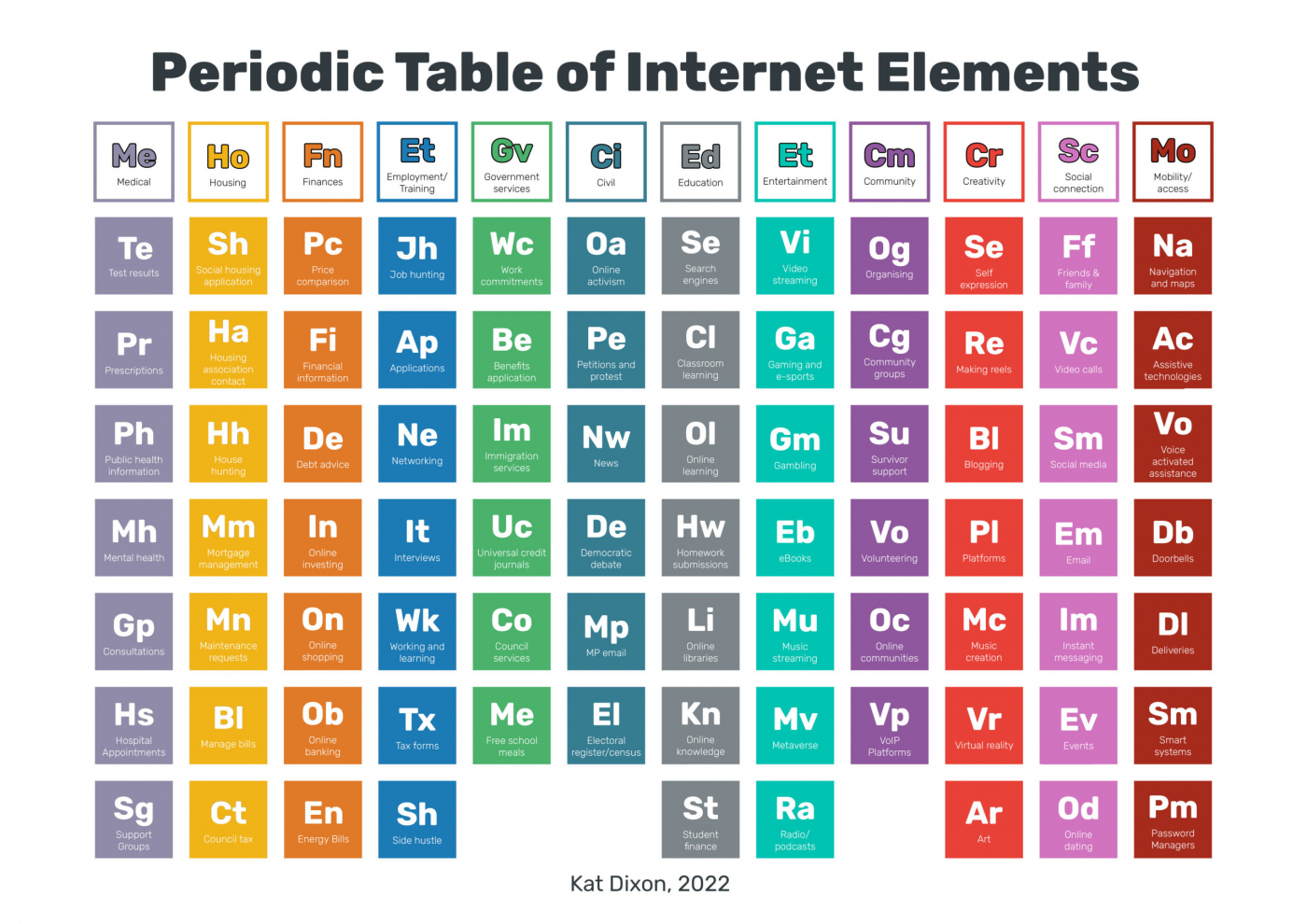
A graphical representation of the periodic table which includes descriptions of digital capabilities rather than chemical elements

Table by Kat Dixon at the Data Poverty Lab on what you need the internet for. Downloadable version here.

How do Digital Champions combat digital inequality?